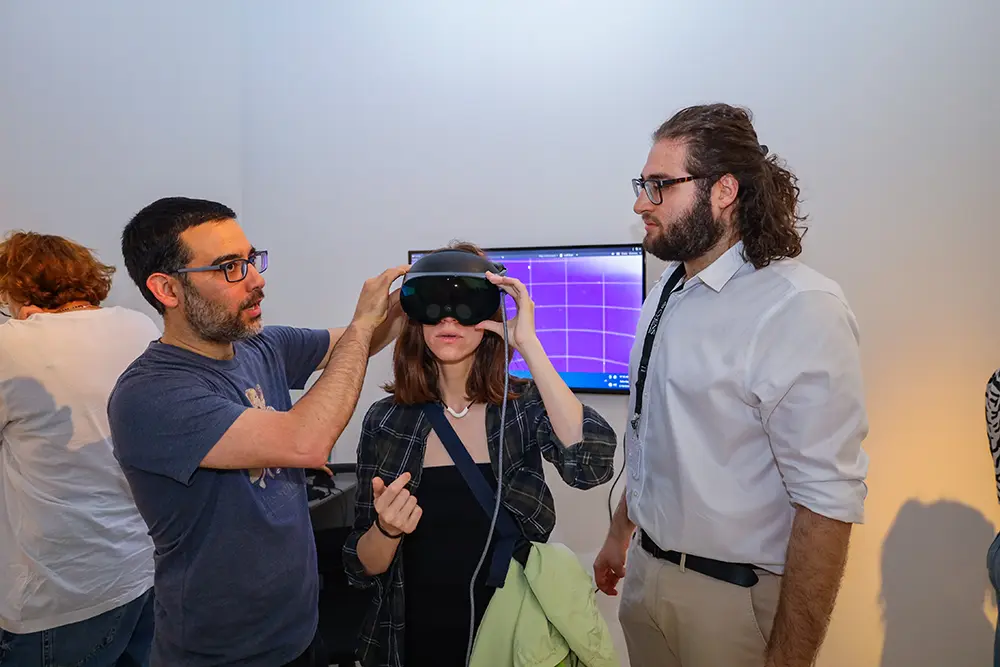
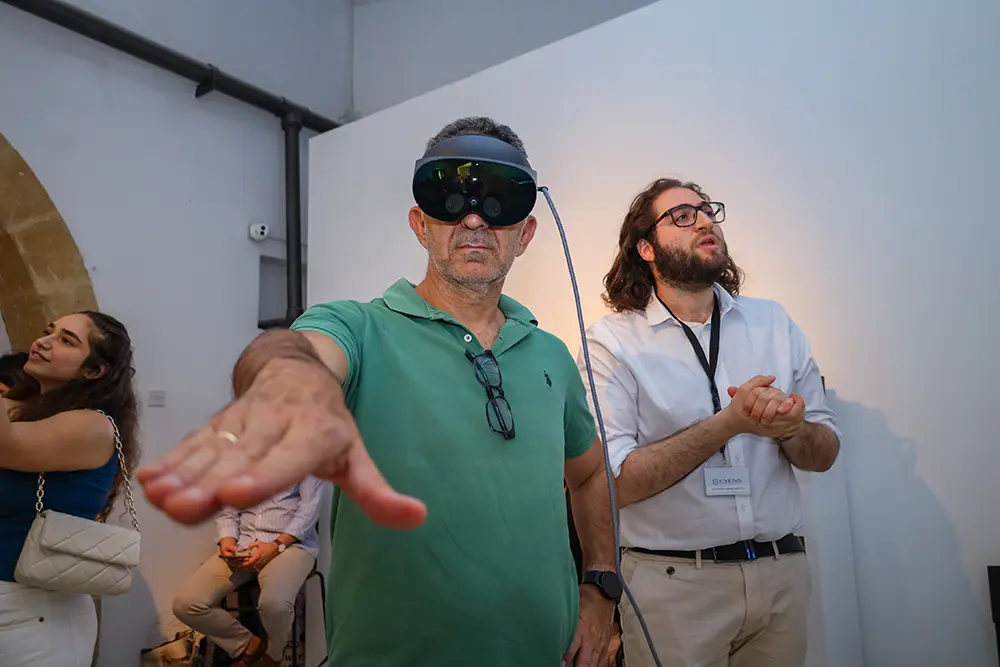
In an era where inclusivity and accessibility are becoming increasingly essential, museums and cultural heritage sites are evolving to embrace cutting-edge technologies and assistive devices to create more inclusive environments. This talk explores the current state of the art in accessibility within cultural heritage spaces, particularly museums, highlighting recent advancements and their impact on enhancing visitor experiences.
The discussion will cover a variety of solutions aimed at improving accessibility for individuals with disabilities. Key topics will include Assistive Devices, Digital Technologies, Universal Design Principles, Case Studies, and Future Trends. Featuring expert insights and real-world examples, the talk will provide a comprehensive understanding of how technology is reshaping the accessibility landscape in museums and cultural heritage sites.
Co-creators and Co-presenters:
Aristidis Charalambous – Intern at ITICA
Tania Garcia-Vite – Postdoctoral Associate at Neo-Move
Coordination:
Kleanthis Neokleous – Team leader of ITICA
Technical support and development:
Kleanthis Neokleous – Team leader of ITICA
Fotos Frangoudes & Kalli Koulloufidou – Research Associates at ITICA
Panayiotis Charalambous – Team leader of Pulse
Christina Pari & Eva Athanasiou – Research Associates at Neo-Move


The talk proposed is a joint project by Tania Karina García Vite and Aristidis Charalambous.
Tania Karina García Vite is a cognitive neuroscientist with a PhD from the University of Essex, UK. Currently, she serves as a Postdoctoral Research Associate with the Neo-Move Team at CYENS Centre of Excellence, her experience spans academic and industry in both Cognitive Neuroscience, Psychology as well as diversity, inclusion and accessibility research.
Aristidis Charalambous studied computer science at University of Cyprus, he is currently an intern at ITICA team at CYENS. His interest in Accessibility comes from lived experience, he has a Visual impairment that affects his central vision and has around 30% of vision in both eyes.
In an era where inclusivity and accessibility are becoming increasingly essential, museums and cultural heritage sites are evolving to embrace cutting-edge technologies and assistive devices to create more inclusive environments. This talk explores the current state of the art in accessibility within cultural heritage spaces, particularly museums, highlighting recent advancements and their impact on enhancing visitor experiences.
The discussion will cover a variety of solutions aimed at improving accessibility for individuals with disabilities. Key topics will include Assistive Devices, Digital Technologies, Universal Design Principles, Case Studies, and Future Trends. Featuring expert insights and real-world examples, the talk will provide a comprehensive understanding of how technology is reshaping the accessibility landscape in museums and cultural heritage sites.
Co-creators and Co-presenters:
Aristidis Charalambous – Intern at ITICA
Tania Garcia-Vite – Postdoctoral Associate at Neo-Move
Coordination:
Kleanthis Neokleous – Team leader of ITICA
Technical support and development:
Kleanthis Neokleous – Team leader of ITICA
Fotos Frangoudes & Kalli Koulloufidou – Research Associates at ITICA
Panayiotis Charalambous – Team leader of Pulse
Christina Pari & Eva Athanasiou – Research Associates at Neo-Move
The talk proposed is a joint project by Tania Karina García Vite and Aristidis Charalambous.
Tania Karina García Vite is a cognitive neuroscientist with a PhD from the University of Essex, UK. Currently, she serves as a Postdoctoral Research Associate with the Neo-Move Team at CYENS Centre of Excellence, her experience spans academic and industry in both Cognitive Neuroscience, Psychology as well as diversity, inclusion and accessibility research.
Aristidis Charalambous studied computer science at University of Cyprus, he is currently an intern at ITICA team at CYENS. His interest in Accessibility comes from lived experience, he has a Visual impairment that affects his central vision and has around 30% of vision in both eyes.

